
Yesterday I was in a two and a half hour deep dive with a new client, walking through every aspect of her business for the Ops Playbook. And she said something I haven’t been able to stop thinking about.
We were talking about how she handles underperformance, and she told me that when she sees a pattern that isn’t working, she has the conversation right away. Not months later. Right away. She asks directly: is this role a fit? Are you committed to making this work? And based on the answer, she knows what to do next.
She has multiple thriving locations. I do not think that is a coincidence.
🎧 Listen on YouTube // Apple // Spotify 🎧
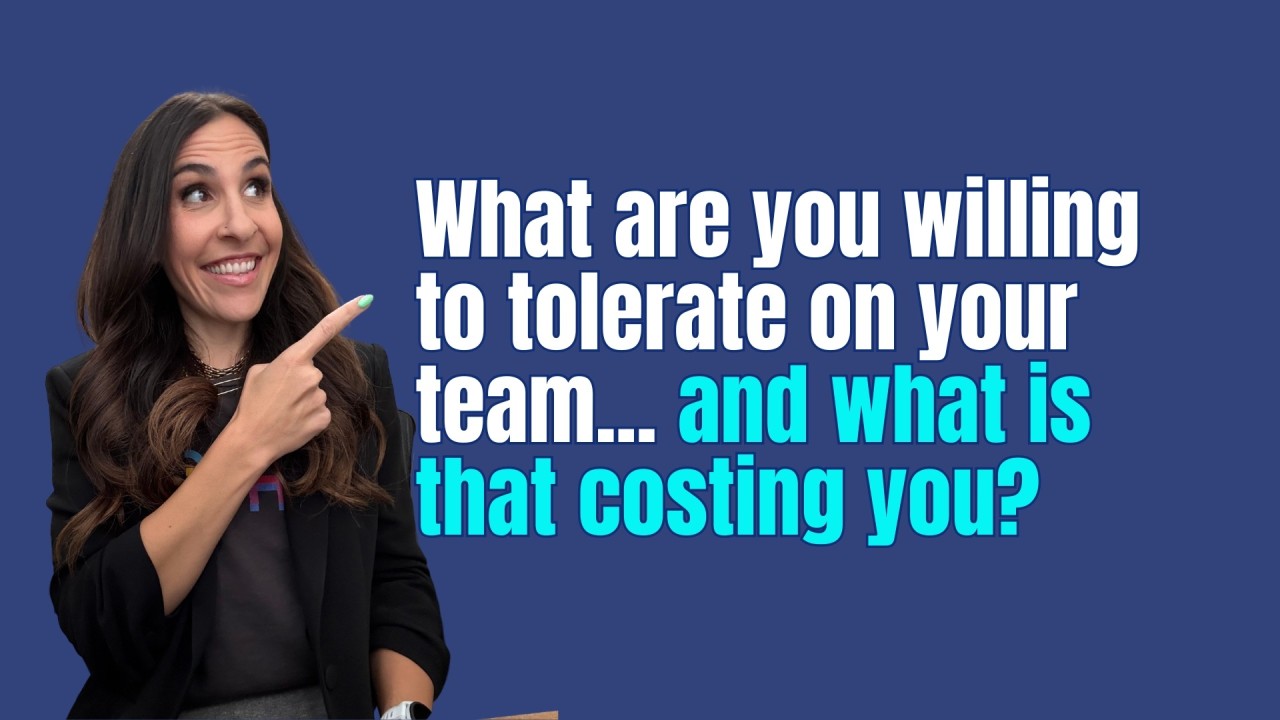
That conversation brought me straight to the question I want every leader reading this to sit with: what are you willing to tolerate?
Because your business will only ever rise to that level. Whatever you’re allowing to keep happening, you’re also communicating is acceptable. The deliverables that roll from week to week. The attitude that’s just a little off. The person who says they’ll get to it and never does. Every week that goes by without a direct conversation is a week you’ve decided, consciously or not, that this is okay.
And the cost of that compounds. Research shows that underperforming employees cause 78% of coworkers to decrease their commitment to the organization. The people you can least afford to lose are the ones keeping score. I know this firsthand. For years in the corporate world I was the high performer on team after team, picking up slack for people who weren’t delivering while my leader looked the other way. And eventually I left. Not because of the low performer. Because of the leader who wouldn’t do anything about it.
That is the real cost. Not the person working 15 hours for the price of 40. It is the person carrying your business forward who decides they deserve better.
The fix is the same thing my client does. Have the conversation. Not as an ultimatum, not guns blazing- with clarity and empathy. Here are the expectations. Here are the gaps. Are you committed to closing them? The people who are genuinely bought in can hear that. They get to work. The ones who can’t hear it? That is your answer too.
And if part of you is hesitating because you know you haven’t really given clear feedback yet, that is worth examining. Give the feedback first. Make the expectations clear. Put the decision back on them. That is what it looks like to lead well, and it changes everything about how the conversation feels.
What are you willing to tolerate? Ask yourself that every single week.
Go listen to this week’s episode of Real Talk: Leading Small Teams for the full breakdown.
🎧 Listen on YouTube // Apple // Spotify 🎧
If you want help figuring out exactly what to say in that conversation, email me at [email protected]. Planning these out is something I do with clients every single day and it is always less scary than you think once you have a plan.
